The future of work is about tasks, not titles.
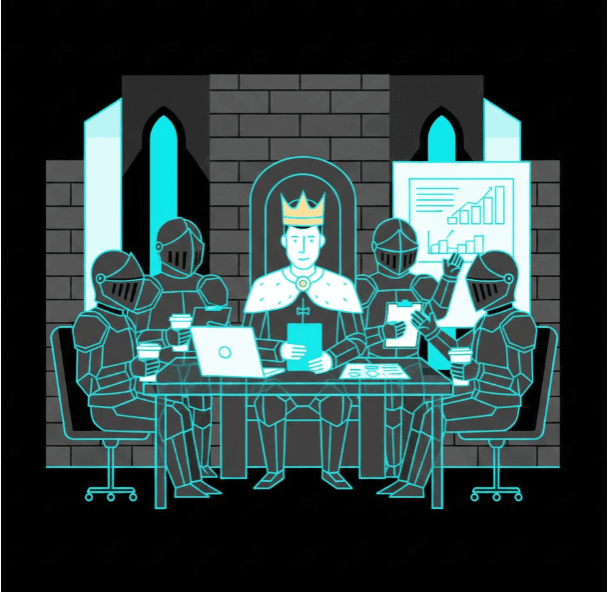
Every company is a small kingdom.
It has its own rules, its own language, its own social hierarchy. You enter through interviews instead of visas. You learn the culture the way a newcomer learns local customs. You follow policies that sometimes make perfect sense… and sometimes feel like ancient traditions nobody remembers creating.
And every kingdom has its court:
👑 Executives: the royal court setting direction for the realm
🛡️ Managers: regional governors translating strategy into daily reality
🧙 Specialists: the skilled craftsmen who actually make things work
📜 HR: the constitution keepers ensuring the kingdom stays lawful (and occasionally reminding everyone about mandatory training)
Just like countries, each company develops its own identity too. Some reward speed and chaos, bustling trading ports. Others value process and precision, well-regulated empires. Some speak fluent "innovation." Others communicate exclusively in spreadsheets and approval workflows.
There’s another part of this story that gets less attention.
When someone changes jobs, they usually think they're changing roles. What they're actually doing is migrating between cultures. Same title. Same skills. Completely different kingdom.
A "Manager" in one company is a real decision-maker. In another, they spend most of their week navigating layers of approvals just to move something forward. A "Data Scientist" builds predictive models in one place and cleans dashboards in another.
Titles travel poorly across borders. Skills travel much better.
For decades, this was fine. Organisations were designed like medieval guilds, with fixed titles, clear responsibilities, and expertise accumulated slowly over the years. The kingdom changed, but slowly enough that the roles inside it could keep up.
Then AI showed up.
Not as another tool on the software list. More like a new type of worker appearing overnight, one that can draft documents, analyse data, write code, summarise a two-hour meeting in 30 seconds, and pick up new tasks faster than any onboarding plan allows.
And once that happens, the idea of a "job" starts to feel less solid.
Work stops being one fixed role and starts revealing itself as a collection of smaller pieces. Some need human judgment, context, relationships, and creativity. Others just need speed and scale, and AI is very good at speed and scale.
The focus is starting to move away from roles and toward the work itself: what needs doing, and how best to do it.
For companies: redesign work, don’t just add AI.
For individuals: build adaptable skills, not fixed roles.
The advantage will belong to those who evolve how work gets done.