Before You Hire Another Person, Borrow This Trick From Instructional Design
I once worked with a company searching for “a strong project manager”.
Deadlines were slipping, clients were frustrated, and everyone assumed the answer was to hire someone highly organised.
They moved quickly: posted the job, interviewed fast, and hired someone impressive.
Two months later… nothing had improved.
Because the real problem wasn’t project management.
It was client communication.
This is exactly where Instructional Design thinking can transform hiring.
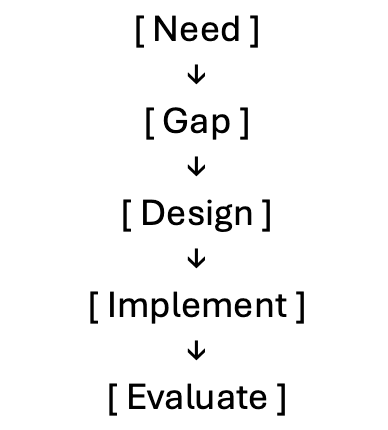
1. Start with a Needs Assessment
In Instructional Design, you never build training before understanding the real problem. Hiring should follow the same rule.
Once we dug deeper, we realised the issue wasn’t deadlines, it was unclear client expectations. They didn’t need a “project manager”; they needed someone who could manage conversations.
2. Identify the Gap
Instead of assuming what the role requires, ask: What is actually missing today?
In this case, the gap wasn’t planning or scheduling.
It was confidence, clarity, and the ability to translate vague client messages into concrete actions.
3. Design the Evaluation to Match the Need
Generic interview questions won’t uncover the gap.
So we added:
• A short scenario with a “difficult client”
• A writing task summarising a vague email
• A scorecard focused on communication behaviours
The best candidates suddenly looked very different.
4. Implement Consistently
Every candidate went through the same process.
Some of the strongest CVs struggled.
Others with exceptional communication instincts shone immediately.
5. Evaluate the Outcome
The person they hired wasn’t the most experienced PM, but she was brilliant with clients. Within weeks, complaints dropped.
Within months, delivery timelines stabilised.
She solved the real problem.
𝗧𝗵𝗲 𝗟𝗲𝘀𝘀𝗼𝗻
Borrowing Instructional Design principles helps you hire with purpose, not assumptions:
• Understand the true need
• Identify the gap
• Design targeted evaluation tools
• Run the process consistently
• Review and improve
Instructional Design is more than an L&D tool. It’s a practical framework for creating a hiring process that actually solves problems.