
AI/ML Has No Single “Right” Background
One of the most common questions I hear from candidates and organisations is:
“What background is best for AI / ML: math, computer science, physics, linguistics?”
The honest answer: AI/ML thrives on diversity of backgrounds.
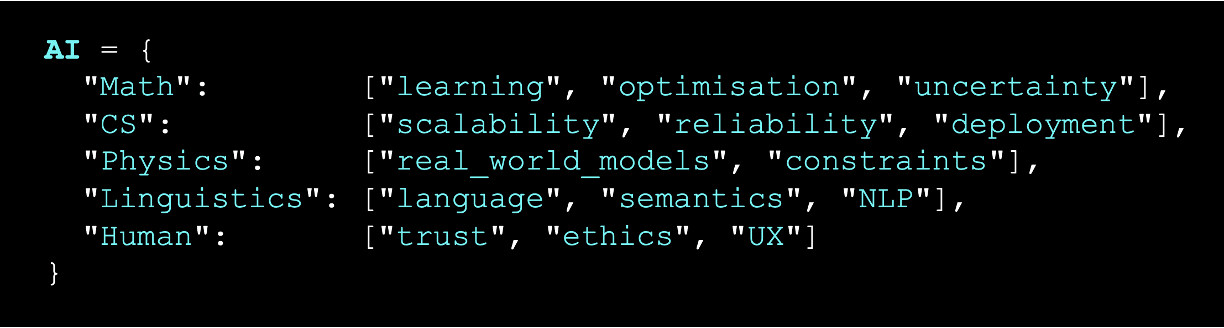
🔹 Mathematics builds the backbone: probability, statistics, linear algebra, optimisation. It helps you understand why models behave the way they do.
🔹 Computer Science turns ideas into reality: algorithms, software engineering, scalable systems, MLOps. This is how models survive production.
🔹 Physics & Engineering bring system thinking: modelling real-world processes, constraints, and optimisation.
🔹 Linguistics & Cognitive Sciences shape better NLP, human-AI interaction, and explainability — the human touch AI increasingly needs.
👉 The strongest AI/ML engineers I’ve worked with aren’t defined by one degree; they’re represented by how well they combine theory, implementation, and perspective.
𝗪𝗵𝗮𝘁 𝗔𝗰𝘁𝘂𝗮𝗹𝗹𝘆 𝗠𝗮𝗸𝗲𝘀 𝗮 𝗦𝘁𝗿𝗼𝗻𝗴 𝗔𝗜/𝗠𝗟 𝗘𝗻𝗴𝗶𝗻𝗲𝗲𝗿 𝗧𝗼𝗱𝗮𝘆?
It’s a balance of:
• Mathematical reasoning
• Hands-on implementation
• Learning mindset & adaptability
• Ability to translate human problems into machine-learnable ones
And as engineers grow, the path branches:
• Deep technical experts
• System architects & ML platform builders
• Technical leaders bridging business, ethics, and people
There is no single ladder, only intentional progression.
🤝 Why This Matters for Hiring & Career Growth
At i4ce, we see both sides:
• Organisations struggle to hire AI/ML talent because CVs don’t reflect real capability.
• Candidates struggle because their background doesn’t fit a narrow stereotype.
Our role is to bridge that gap with deep technical understanding, structured evaluation, and a people-first approach that recognises potential as much as experience.
AI/ML success isn’t about chasing buzzwords.
It’s about building balanced teams with complementary strengths.