
The First QA Test in History Didn’t Involve Humans
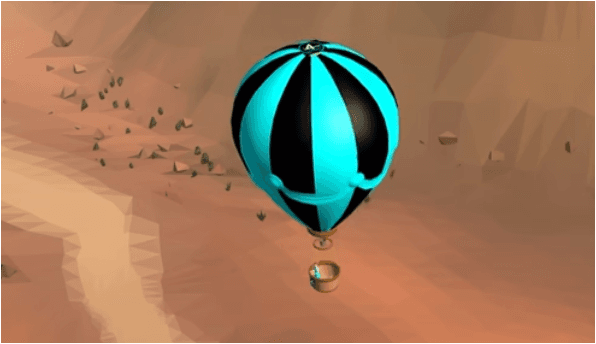
In 1783, before letting a human anywhere near a hot air balloon, the Montgolfier brothers ran what might be the world’s first QA experiment.
Their test subjects?
🐑 A sheep, to represent humans
🦆 A duck, already good at flying
🐓 A rooster, famously bad at flying
No dashboards.
No test plans.
No risk committee.
Just one question:
“If this goes wrong… who do we send first?”
All three survived.
Human flight followed soon after.
🔬 What’s fascinating is not the animals, it’s the thinking
They didn’t test everything.
They tested representative behaviour under risk.
In modern terms:
• One subject close to production (the sheep)
• One control group (the duck)
• One edge case (the rooster)
That’s… surprisingly solid QA logic.
Fast-forward 243 years, welcome to AI QA
Today, we don’t send sheep into production.
We send:
• synthetic users
• automated test agents
• AI-generated edge cases
• adversarial inputs
But the core problem hasn’t changed:
How do you test something powerful without hurting real users?
The difference?
QA used to be a physical risk
Now it’s systemic risk: bias, hallucinations, silent failures, scale
And unlike balloons, AI systems learn while flying.
🧠 The Modern QA Shift
Traditional QA asked:
“Does it work as expected?”
AI QA asks:
“How does it behave when expectations break?”
That’s why modern QA is moving:
• from scripts → scenarios
• from pass/fail → confidence levels
• from coverage → behaviour under uncertainty
In a way, we’re back to 1783, carefully choosing who and what goes first.
🌍 Why This Matters for Tech Leaders
The Montgolfier brothers didn’t scale flight by being reckless.
They scaled it by being curious, cautious, and systematic.
AI leaders face the same moment:
• You can’t test everything on real users
• You can’t rely on assumptions
• You must design QA for unknown outcomes
Because when systems fly higher, mistakes fall farther.
At iForce Connect, we help teams scale AI with quality built in, because at altitude, even small mistakes matter. Let's connect.