
The Water Is the Easy Part
We won't put a glass of water near a laptop. But we're pouring thousands of gallons of it over racks of the same silicon, every single day.
That line from today's techUK "Frontier Compute" event captured the theme of everything that followed. The session brought together voices from across the AI hardware and energy world to talk through one question: what happens when AI's appetite for compute outgrows the grid that's supposed to power it.
The point was simple once you sit with it. Nobody would let a drink anywhere near their laptop - the instinct is automatic. Yet at industrial scale, that's exactly what we do: thousands of gallons pumped through data centres, over exactly the same silicon we'd never let near a splash on a desk. It's not that the logic is wrong. It's that we've never really had to look at it directly before now.
And it turns out the water is the easy part to picture. The harder problem is the electricity behind it. There was broad agreement that AI's energy and water demands are now a real infrastructure problem, not a hypothetical one - the UK government has already forecast it will need at least 6GW of AI-capable data centre capacity by 2030. Where people disagreed was on what actually fixes it.
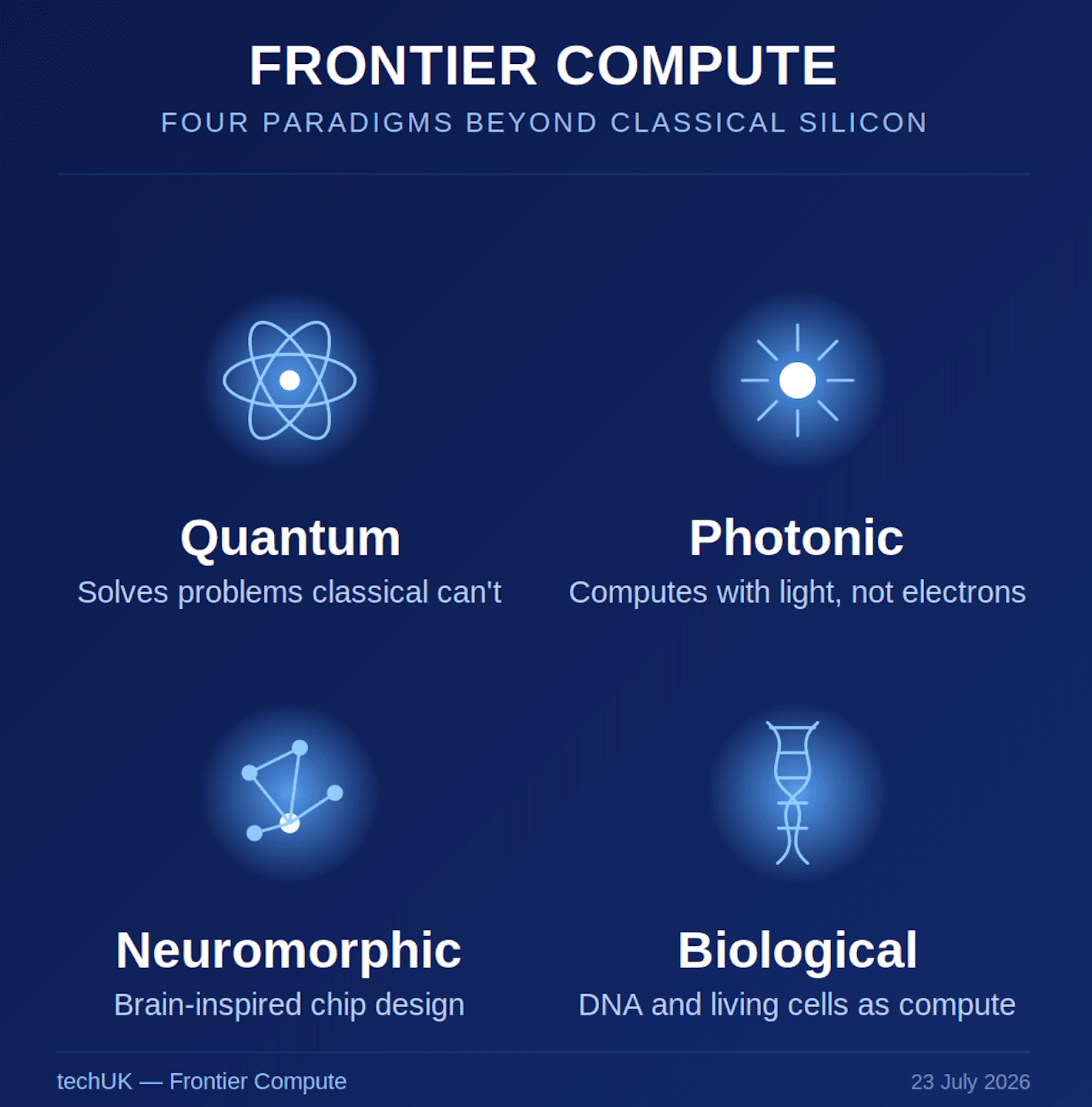
The optimistic case: emerging paradigms - photonic, neuromorphic, quantum and even biological computing - could begin chipping away at today's energy curve, while the grid operator is already reforming how projects get connected, moving away from "first come, first served" toward "first ready, first needed."
The sobering case: we've been here before. Every past leap in compute efficiency has made computing cheaper and more available, and total energy use went up, not down. That's the Jevons Paradox, and I didn't hear a convincing argument for why this time would play out differently.
Sitting there, that's the bit that stayed with me. The industry loves to frame this as an engineering problem - better chips, better cooling, better qubits. Most of what actually got discussed on stage was policy, permitting and grid economics. The hard limit on the next wave of AI might just come down to how fast the UK can rebuild the plumbing underneath it.