
The Quiet Quantum Fix for Fragmented Hospitals
Not every frontier compute story is about breakthroughs. Some are about fixing what's already broken - and that might matter more.
Healthcare systems worldwide run on fragmentation, and this isn't a uniquely American problem. In England, 93% of NHS trusts now have an EPR, but only 30% have fully integrated, bi-directional data flows. And 65% of local NHS technology spend goes to keeping the core estate running, while less than 10% reaches technologies such as remote monitoring, population health and AI-assisted triage. In Wales, a 2026 assessment identified more than 1,400 digital systems in use across the NHS, with patient information distributed across around 300 separate systems.
Rural hospitals feel this hardest. In a Black Book survey of 202 rural healthcare organisations across 41 US states, 55% planned to reassess or replace their EHR systems by the end of 2026, weighed down by cost, cybersecurity pressures and systems that often don't fit the operational realities of smaller rural hospitals.
What if a hospital that size could clean up messy, disconnected data without tearing out its existing systems? What if the same infrastructure could route problems to classical compute, quantum resources, or risk models, secured against future cryptographic threats?
That's the problem a team I met recently, Brilliancy Quantum, is tackling. Much of their work today is centred on community and rural healthcare, including hospitals in Kansas and Missouri where smaller teams and tighter budgets can make fragmented systems particularly difficult to modernise.
Complexity Science, their data-quality platform, connects multiple existing data sources, compares schemas against each other, and turns analyst review into a deployable remediation plan, built to fit into existing data governance rather than forcing a rip-and-replace.
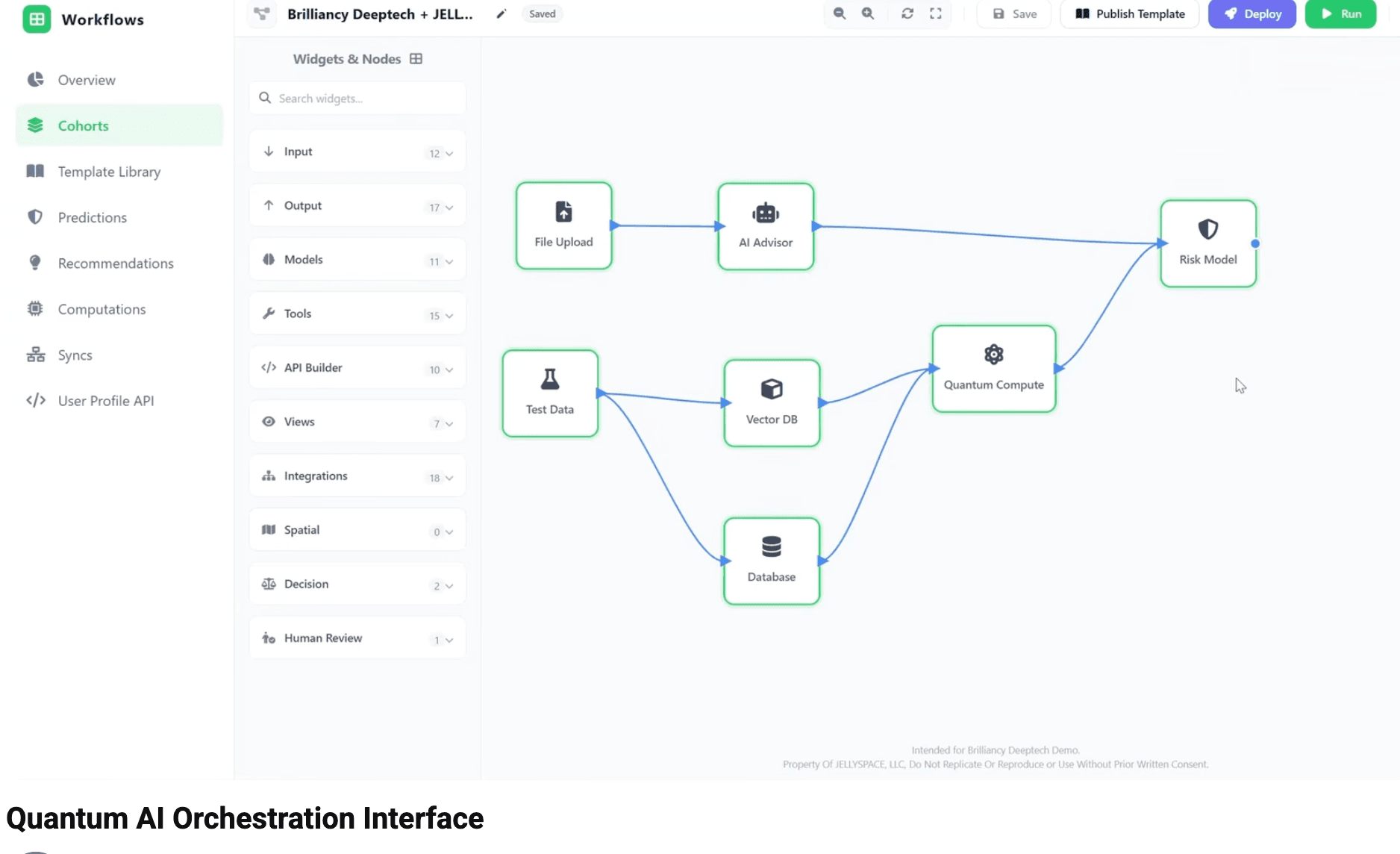
Quantum Orchestration, a control plane combining classical compute, quantum clusters, databases, risk models, and post-quantum cryptography into a single workflow, supporting chemistry, biology, and mixed pipelines, deployable on-premises, air-gapped, or across major cloud providers.
That last piece matters more than it might sound. Healthcare data has some of the longest security shelf-lives of any industry, and "harvest now, decrypt later" isn't an abstract risk for records that need protecting for decades. Building post-quantum cryptography into the orchestration layer now, rather than bolting it on later, is the right instinct.
It was a genuinely impressive conversation with Trey Rutledge, a real example of frontier compute solving an unglamorous, high-stakes operational problem rather than chasing a headline use case.
Sources: NHS England (2026); Baringa, NHS Local Tech Spend Report (2026); Digital Health and Care Wales (2026); Black Book Market Research (2026); Brilliancy Health.