
Quantum computing: what it means for business in 2026
McKinsey & Company estimates quantum computing could generate up to $2.7 trillion in economic value globally by 2035. Over 300 companies - including Airbus and JPMorganChase are now exploring commercial quantum use cases with vendors. McKinsey argues this marks a shift from a long-term research topic to a strategic management issue.
Where businesses are moving first.
Financial services, chemicals & life sciences, and automotive & logistics are among the leading sectors exploring quantum - from portfolio optimisation and molecular simulation to large-scale routing problems that become increasingly complex for classical computers.
Timeline: further out than the headline.
IBM's own roadmap targets fault-tolerant computing around 2029 - still a major technical challenge. One part doesn't wait, though: post-quantum cybersecurity. National Institute of Standards and Technology (NIST) finalised new encryption standards in 2024, and 2026 is becoming a key year for enterprises to begin migration planning, mainly to defend against "harvest now, decrypt later" attacks. Worth a conversation this year if your business holds sensitive data long-term.
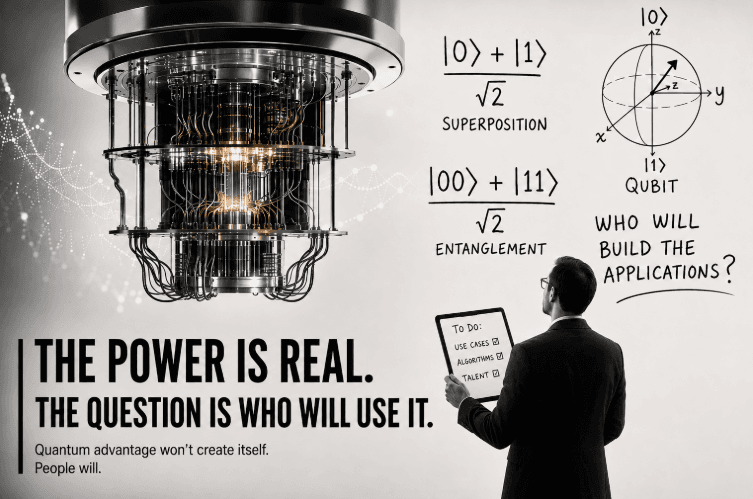
The actual bottleneck: people, not physics.
Fewer than 1,000 specialists worldwide focus primarily on quantum error correction, against a projected need of 5,000-16,000 by 2030. Across the field, 50-66% of quantum job openings go unfilled.
The good news: the entry bar is lower than you'd think.
Fewer than half of quantum job postings now require a PhD - around 55% ask for a Bachelor's, Associate's, or technical certificate, as demand expands into software, hardware assembly, and systems engineering. 45+ universities now offer quantum programmes, and IBM and university partners have committed to preparing up to 40,000 students over the next decade through quantum education initiatives.
A critical emerging role isn't necessarily a physicist - it's a "quantum translator": someone who understands finance, chemistry or logistics well enough to spot where quantum could realistically create value.
What this means if you're in one of these sectors.
You probably don't need a quantum physicist yet. But it's worth having someone on your radar who can translate what quantum can realistically do into your specific challenges, because building this capability takes time before demand accelerates. That's a workforce-planning question as much as a technology one, which is where we spend our time at iForce Connect.
Sources: McKinsey Quantum Technology Monitor 2026, Riverlane QEC Report 2025, NIST PQC Standards, IBM Quantum Education Initiative.