
Biological Computing: When living cells become part of computing.
Like many people in technology, I used to see biotech as someone else's world. That view is starting to change.
One of AI's biggest challenges right now is power. Training and running large AI systems takes enormous amounts of electricity, and for many companies, access to energy is becoming as important as access to chips. Researchers are exploring a different idea: could biology handle some types of computing more efficiently than silicon?
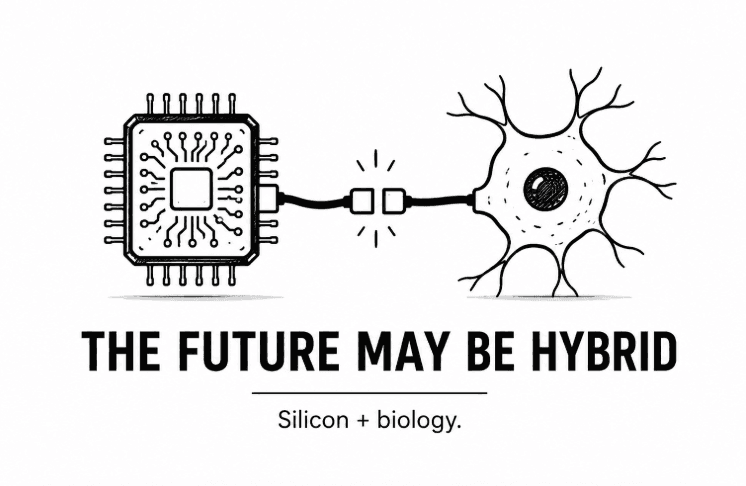
This doesn't mean putting tiny brains inside computers. Scientists take ordinary human cells, reprogram them into stem cells, and guide them to become neurons - brain cells - in a lab. These are connected to electronic chips, stimulated, and monitored, letting researchers study how biological neural networks process information. The first research platforms already exist.
𝙻̲𝚒̲𝚟̲𝚒̲𝚗̲𝚐̲ ̲𝚗̲𝚎̲𝚞̲𝚛̲𝚘̲𝚗̲𝚜̲ ̲𝚊̲𝚜̲ ̲𝚌̲𝚘̲𝚖̲𝚙̲𝚞̲𝚝̲𝚎̲𝚛̲𝚜̲
Cortical Labs built the CL1, a device with around 800,000 human neurons connected to a chip. The system sends electrical signals to the cells and measures how they respond. Researchers study whether those responses can be used for computing tasks. Today it's mainly used for research into robotics and adaptive systems.
FinalSpark offers researchers cloud access to similar biological systems through its Neuroplatform.
Neither will replace our laptops. The goal is understanding whether biology can solve specialised computing problems differently.
𝙳̲𝙽̲𝙰̲ ̲𝚊̲𝚜̲ ̲𝚍̲𝚊̲𝚝̲𝚊̲ ̲𝚜̲𝚝̲𝚘̲𝚛̲𝚊̲𝚐̲𝚎̲
We're generating more data than ever, and DNA offers a completely different way to store it. A tiny amount of synthetic DNA can store huge amounts of information and preserve it for decades or longer under suitable conditions.
Companies like Biomemory and CATALOG are exploring DNA storage for long-term archives. The limitation is speed: writing data can take hours. Think of DNA as a future replacement for old archives, not daily files.
𝙱̲𝚒̲𝚘̲𝚕̲𝚘̲𝚐̲𝚢̲ ̲𝚊̲𝚜̲ ̲𝚊̲𝚗̲ ̲𝚒̲𝚗̲𝚏̲𝚘̲𝚛̲𝚖̲𝚊̲𝚝̲𝚒̲𝚘̲𝚗̲ ̲𝚜̲𝚘̲𝚞̲𝚛̲𝚌̲𝚎̲
Living systems can also provide information that computers struggle to capture from traditional measurements. Exalt tests how real tumour cells respond to different cancer drugs, helping doctors understand which treatments may work best. Quantune Technologies GmbH is developing wearable sensors that monitor chemical signals in the body without traditional blood tests.
𝚆̲𝚑̲𝚢̲ ̲𝚒̲𝚝̲ ̲𝚖̲𝚊̲𝚝̲𝚝̲𝚎̲𝚛̲𝚜̲
Computing progress has long come from making silicon chips smaller and faster. Biological computing explores another path: future computers may combine silicon with biology. These technologies are early, but the first commercial platforms are already emerging, and the next generation of computing may need people who understand both engineering and biology.
That's worth watching.